What does your daily working line German Shepherd schedule look like?

Joined
Sep 7, 2025
Messages
233
Reaction score
158
I just read a recent post about how much structure and stimulation WL GSDs need, and now I’m really curious (and a little intimidated 😅). For those of you with working line dogs, what does your actual day-to-day routine look like? How much training, exercise, and mental work do you do on a normal weekday? And what changes on weekends? I’d love to get a realistic picture of what “enough” looks like for a WL. Not just the theory, but the daily rhythm. It’s one thing to read about all the needs, but seeing how real owners fit it into their lives would help a ton. I’m trying to learn as much as I can before I eventually get a dog of my own.
 
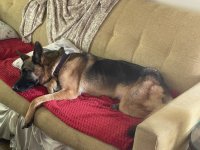
Zenya is a Certified Service Animal and goes with Mom on her daily travels and stops as a Vet-Tech/Pet Sitting business…. 7-12 visits and 2-3 play date/Magic Circle time, daily. There’s a good base of regular clients and new clients. Of course, when Dad come home, Zenya wants to play tug or ball …. Dad is the fun parent.

You would think the 6am start would be a long day for our princess, but she’s ‘up for anything’.
 

Attachments

  • IMG_1580.jpeg
    IMG_1580.jpeg
    4 MB · Views: 1
Good on you for asking this before jumping in. Most people find out the hard way.

Here’s the truth: a WL GSD doesn’t need you to run marathons or train like a professional handler, but they do need consistency, structure, and something meaningful to do every single day. It’s less about nonstop activity and more about a predictable rhythm that drains the mind and the body.

A normal weekday for Breaker looked something like this:

Early morning:
Short on-leash walk to warm up his brain, then 5-10 minutes of obedience or engagement work. That’s it. Not long, not fancy, just enough to set the tone for the day.

Midday / early afternoon:
A structured tug or fetch session when I’m home. Ten minutes of the right kind of play will empty a WL dog faster than a one-hour walk. If he’s mentally sharp, we shape a position or practice clean reps for a couple minutes.

Evening:
Another short session, either obedience, neutrality work, or a little tracking/scent game. Same thing: 5–10 minutes max. Then he settles while I relax or get house stuff done. Place training and enforced quiet time matter just as much as the active pieces.

Weekends look different:
More off-leash exploration, a longer hike, or more in-depth training depending on weather and time. Nothing crazy, just something that lets him use his nose and brain freely.

What surprises most people is that it’s not hours of grind. It’s intentional, structured moments sprinkled throughout the day. Five minutes here, ten minutes there. The biggest difference with working lines isn’t the workload it’s that you can’t skip the routine. When you keep it consistent, they settle beautifully. When you don’t, they start inventing problems.

If you build your life around little windows of engagement instead of one giant block of effort, living with a WL becomes very doable and honestly, pretty fun.
 
Malakai said it well. I'll add some general advice to that.

Two things that were drilled into me when I started training working dogs:
  1. Whenever you are with your dog, one of you is training the other. You have to make the conscious decision to be the one doing the training and not being trained.
  2. Everything you do with your dog is a training opportunity.
I sometimes let my dogs train me to do things if it is something that makes them happy and won't interfere with obedience, behavior, working needs. #2 lets me accomplish a lot of training throughout the day in the normal course of events, especially once I have the basics like sit, a short stay, etc. Eventually it got to the point where I do these things without thinking about them.

I firmly believe in giving my dogs choice whenever I can. In regard to training, this means that I may go into a focused session thinking I'm going to work on one thing, but the dog tells me she would prefer to work on something else, so I'll switch to that. By doing this we'll progress faster on that particular thing because she wants to do it and had a say in it.

One thing I do throughout my dog's life is have "dog time" at least once a week. I do this outside at home and also go to areas where there won't be other people and dogs and are safe for my dog to be off lead. For this I simply sit quietly and watch my dog. Engagement is up to her - both if we engage and how we engage. It's a time for her to be a dog and for me to observe and contemplate. You can learn a lot about your dog and strengthen your bond by doing this.

When it comes to training, sometimes less is more and more is less. What this means is that if your dog does so well on on a rep that it can't possibly do better at that stage, stop right there and avoid the temptation to do one more. Even if it's the first rep. When you get that rep that is as good as your dog can do at that stage, give a huge reward with lots of praise, and then the dog has quiet time for an hour. A huge reward with lots of praise will release endorphins and the dog will ride the endorphin high for an hour. If they have quiet time while riding the high, they will spend that time thinking about what they did to get that and processing what they just learned. This means the knowledge sticks in their brain better and learning becomes more efficient. There's a bunch of science behind this and I see it in my SAR work. The handlers that practice this have better dogs that progress more quickly than the dogs of handlers who always want to do one more problem and think that they need to be working their dog constantly.

 
Malakai said it well. I'll add some general advice to that.

Two things that were drilled into me when I started training working dogs:
  1. Whenever you are with your dog, one of you is training the other. You have to make the conscious decision to be the one doing the training and not being trained.
  2. Everything you do with your dog is a training opportunity.
I sometimes let my dogs train me to do things if it is something that makes them happy and won't interfere with obedience, behavior, working needs. #2 lets me accomplish a lot of training throughout the day in the normal course of events, especially once I have the basics like sit, a short stay, etc. Eventually it got to the point where I do these things without thinking about them.

I firmly believe in giving my dogs choice whenever I can. In regard to training, this means that I may go into a focused session thinking I'm going to work on one thing, but the dog tells me she would prefer to work on something else, so I'll switch to that. By doing this we'll progress faster on that particular thing because she wants to do it and had a say in it.

One thing I do throughout my dog's life is have "dog time" at least once a week. I do this outside at home and also go to areas where there won't be other people and dogs and are safe for my dog to be off lead. For this I simply sit quietly and watch my dog. Engagement is up to her - both if we engage and how we engage. It's a time for her to be a dog and for me to observe and contemplate. You can learn a lot about your dog and strengthen your bond by doing this.

When it comes to training, sometimes less is more and more is less. What this means is that if your dog does so well on on a rep that it can't possibly do better at that stage, stop right there and avoid the temptation to do one more. Even if it's the first rep. When you get that rep that is as good as your dog can do at that stage, give a huge reward with lots of praise, and then the dog has quiet time for an hour. A huge reward with lots of praise will release endorphins and the dog will ride the endorphin high for an hour. If they have quiet time while riding the high, they will spend that time thinking about what they did to get that and processing what they just learned. This means the knowledge sticks in their brain better and learning becomes more efficient. There's a bunch of science behind this and I see it in my SAR work. The handlers that practice this have better dogs that progress more quickly than the dogs of handlers who always want to do one more problem and think that they need to be working their dog constantly.

Man, this is solid advice, especially the part about choice and knowing when to quit on a perfect rep. That’s a level of finesse most people never reach.

I’m curious, though:
What kind of work do you run in SAR? Are you with a department/agency, or on a volunteer search team?

Always love hearing how working dogs operate in the real world.
 
My teammates call me the king of one and done. If my girl's first taste is as good as it can possibly get on that day, I do an extra long reward sequence with as much praise as I can (you can here me from 50m or more sounding like a complete nutter), and then she's done for the day and I assist other teams. She spends the rest of the day riding her endorphin high and reflecting on what she did to get that amazing reward. Ending on a really good one, even if it's the first one, was drilled into me when I started training dogs. More recently, understanding endorphins and dopamine and how they affect learning really changed how we train, especially for her job. Those in the group who train like this have seen our dogs learn more quickly and retain the information better.

As for SAR, my current dog is HRD. My previous one was air scent live find and water recovery. We are volunteers and our group is a 501c3. In my state, SAR is organized at the state level, there are state standards, all groups have an MOU with the state, and the state supports the volunteers by funding the required classes. Basically we are professional volunteers much like volunteer firefighters. All searches are dispatched by the state and we respond throughout the state. Occasionally we will send teams to another state when they make a request for resources.

If people are interested, I'd be willing to do a Q&A about SAR dogs and SAR in general. There's a lot of very particular knowledge in my head.
 
My teammates call me the king of one and done. If my girl's first taste is as good as it can possibly get on that day, I do an extra long reward sequence with as much praise as I can (you can here me from 50m or more sounding like a complete nutter), and then she's done for the day and I assist other teams. She spends the rest of the day riding her endorphin high and reflecting on what she did to get that amazing reward. Ending on a really good one, even if it's the first one, was drilled into me when I started training dogs. More recently, understanding endorphins and dopamine and how they affect learning really changed how we train, especially for her job. Those in the group who train like this have seen our dogs learn more quickly and retain the information better.

As for SAR, my current dog is HRD. My previous one was air scent live find and water recovery. We are volunteers and our group is a 501c3. In my state, SAR is organized at the state level, there are state standards, all groups have an MOU with the state, and the state supports the volunteers by funding the required classes. Basically we are professional volunteers much like volunteer firefighters. All searches are dispatched by the state and we respond throughout the state. Occasionally we will send teams to another state when they make a request for resources.

If people are interested, I'd be willing to do a Q&A about SAR dogs and SAR in general. There's a lot of very particular knowledge in my head.
This is great insight, and it makes total sense in the SAR world. Those dogs aren’t running “reps”, they’re running problems. When a dog hits a full problem cleanly, with the right intensity and mindset, ending on that high absolutely reinforces the behavior you want. That endorphin dump is powerful, and you’re smart to use it.

For obedience or general working-line training, it’s a different rhythm, you’re building mechanics and clarity over time. But for detection, HRD, air scent, live find… people forget how mentally draining those tasks are. One perfect run is work for the day.

And I’d love to see you do a SAR Q&A. Not many handlers understand what goes into that world, and you’ve clearly got the experience to teach it well.

Please make sure to "reply" to my comment so I get pinged and don't miss your response.
 
I use those same principles when training obedience. If my plan is to do 5 reps and the first one is perfect, I do a jackpot with lots of praise and we're done for at least an hour. But I will come back later and do more reps. And to be fair, most of the times it's a one and done with SAR training, it was a really difficult problem. But I have done it when she ran a room with 4 blood smears and was done in 10 minutes with most of that 10 being reward time between the first 3 smears and she actually worked probably 3 minutes. Or if she found a new source she hadn't previously worked from a long distance (~300 m with losing and reacquiring the odor) and we were done in 20 minutes. The main difference being if I'm training something like a new behavior where we need a lot of reps, I won't call it done for the day, but there will be at least an hour break to ride the endorphin high.
 
I use those same principles when training obedience. If my plan is to do 5 reps and the first one is perfect, I do a jackpot with lots of praise and we're done for at least an hour. But I will come back later and do more reps. And to be fair, most of the times it's a one and done with SAR training, it was a really difficult problem. But I have done it when she ran a room with 4 blood smears and was done in 10 minutes with most of that 10 being reward time between the first 3 smears and she actually worked probably 3 minutes. Or if she found a new source she hadn't previously worked from a long distance (~300 m with losing and reacquiring the odor) and we were done in 20 minutes. The main difference being if I'm training something like a new behavior where we need a lot of reps, I won't call it done for the day, but there will be at least an hour break to ride the endorphin high.
Exactly. Celebrate the win and let the dog soak in that “I crushed it” feeling. That’s how you build a worker who wakes up hungry for more.

New behaviors need reps, sure, different category. But once a dog solves a real problem, especially something like long-distance odor loss and reacquisition? One and done. Let them ride that high. That’s how pros keep the fire burning without frying the dog’s brain.
 
My teammates call me the king of one and done. If my girl's first taste is as good as it can possibly get on that day, I do an extra long reward sequence with as much praise as I can (you can here me from 50m or more sounding like a complete nutter), and then she's done for the day and I assist other teams. She spends the rest of the day riding her endorphin high and reflecting on what she did to get that amazing reward. Ending on a really good one, even if it's the first one, was drilled into me when I started training dogs. More recently, understanding endorphins and dopamine and how they affect learning really changed how we train, especially for her job. Those in the group who train like this have seen our dogs learn more quickly and retain the information better.

As for SAR, my current dog is HRD. My previous one was air scent live find and water recovery. We are volunteers and our group is a 501c3. In my state, SAR is organized at the state level, there are state standards, all groups have an MOU with the state, and the state supports the volunteers by funding the required classes. Basically we are professional volunteers much like volunteer firefighters. All searches are dispatched by the state and we respond throughout the state. Occasionally we will send teams to another state when they make a request for resources.

If people are interested, I'd be willing to do a Q&A about SAR dogs and SAR in general. There's a lot of very particular knowledge in my head.
I think a good Q&A post would be about rewards. I made a posy about rewards a while back, but I didn't mention jackpot rewards vs the "quickie" rewards and how your dog responds to each... and i think that is an incredibly important part of dog training for novice trainers to understand.

I might edit my post later today to include that, but I think having more than one person write posts of these topics really improves the resources in this community.
 
I think a good Q&A post would be about rewards. I made a posy about rewards a while back, but I didn't mention jackpot rewards vs the "quickie" rewards and how your dog responds to each... and i think that is an incredibly important part of dog training for novice trainers to understand.

I might edit my post later today to include that, but I think having more than one person write posts of these topics really improves the resources in this community.
I think it's a great topic. In my experience most people don't understand the relative value of rewards to the dog, the difference between food and play rewards and when to use them, and their dog's preferences. A reward that's high value to the dog at home may have zero value in a new environment that is highly distracting. Treats are best used when you need a high rate of reinfocement, are doing detail work, etc, but play is a better reward when you are doing something where you want the dog amped up (like SAR or agility). Then you have the dog's preferences. What do they like in a treat? Flavor and texture matter. What do they like in a toy and how do they want to play? Mouthfeel, size, compressibility,a nd type all matter. Add to that that a dog's preferences can change over time. A lot of people find a reward that works and then only use that one reward anad then wonder why it eventually doesn't work anymore. If you ate your favorite food everyday, evenually it would no longer be your favorite. It's no different with our dogs. Admittedly I'm a big nerd about this, but for the first two years with a dog I maintain a spreadsheet of every reward I try. Food and toys are included and I rank them 0 to 5 with 0 having no value, 1 works at home inside, 2 works outside at home, 3 works away from home in a no/low distraction environment, 4 works away from home in a distracting environment, and 5 works anywhere, any place, any time regardless of distraction level. Typically by age 2 I know my dog's preferences and don't need to track them in detail and just pay attention to what changes, so I stop maintaining the spreadsheet at that point. This gives me more tools in the toolbox. I can provide a reward appropriate to the environment and not burn out the high value rewards by using them everywhere. And because the 4s and 5s don't get used as often, they become even more valuable to the dog via selective withholding. So yeah, there's a whole lot to talk about when it comes to rewards.
 
I think it's a great topic. In my experience most people don't understand the relative value of rewards to the dog, the difference between food and play rewards and when to use them, and their dog's preferences. A reward that's high value to the dog at home may have zero value in a new environment that is highly distracting. Treats are best used when you need a high rate of reinfocement, are doing detail work, etc, but play is a better reward when you are doing something where you want the dog amped up (like SAR or agility). Then you have the dog's preferences. What do they like in a treat? Flavor and texture matter. What do they like in a toy and how do they want to play? Mouthfeel, size, compressibility,a nd type all matter. Add to that that a dog's preferences can change over time. A lot of people find a reward that works and then only use that one reward anad then wonder why it eventually doesn't work anymore. If you ate your favorite food everyday, evenually it would no longer be your favorite. It's no different with our dogs. Admittedly I'm a big nerd about this, but for the first two years with a dog I maintain a spreadsheet of every reward I try. Food and toys are included and I rank them 0 to 5 with 0 having no value, 1 works at home inside, 2 works outside at home, 3 works away from home in a no/low distraction environment, 4 works away from home in a distracting environment, and 5 works anywhere, any place, any time regardless of distraction level. Typically by age 2 I know my dog's preferences and don't need to track them in detail and just pay attention to what changes, so I stop maintaining the spreadsheet at that point. This gives me more tools in the toolbox. I can provide a reward appropriate to the environment and not burn out the high value rewards by using them everywhere. And because the 4s and 5s don't get used as often, they become even more valuable to the dog via selective withholding. So yeah, there's a whole lot to talk about when it comes to rewards.
Ooh ooh ooh I would love to write an article on rewards with you!

How many dogs have you trained with this method?
 
Ooh ooh ooh I would love to write an article on rewards with you!

How many dogs have you trained with this method?
I would say this is more a philosophy of rewards than a particular method as it can be used with any training method that uses rewards. While I primarily use positive reinforcement / operant conditioning, I have teammates that use other methods and styles, and the reward philosophy works equally well for them. I've trained 2 operational SAR dogs and helped a lot of other handlers find their dog's work reward. Plus I converted my buddy dog I had at the time I got my first SAR dog over to positive reinforcement training with this reward philosophy as well. I was fortunate that the person who got me into SAR was, at the time, a well known behaviorist and trainer in the positive reinforcement world and she was always wanting to try out different things with my dogs and me and that lead to my fascination with science behind dog training and behavior and how to maximize my dog's ability to learn. I'm also fortunate to have several friends that are professional trainers that I can get my nerd on with. And while I am not a professional trainer, I do attend a lot of webinars and seminars for professionals as I'm always looking to learn more of the science and new techniques so I can be better with my dog and better help other SAR handlers that aren't as interested in the training aspects. When someone is having a problem with their reward, my first two questions are always, "Who chose the reward - you or the dog?", and "What are your dog's preferences in treats and toys / play style?" And so often the answers are I chose, and I don't really know. Even after 20+ years this still surprises me a bit. Knowing your dog well can really elevate rewards and make your life easier. And for working, letting the dog chose the reward is crucial because it needs to have the highest possible value to them.
 
Zenya is a Certified Service Animal and goes with Mom on her daily travels and stops as a Vet-Tech/Pet Sitting business…. 7-12 visits and 2-3 play date/Magic Circle time, daily. There’s a good base of regular clients and new clients. Of course, when Dad come home, Zenya wants to play tug or ball …. Dad is the fun parent.

You would think the 6am start would be a long day for our princess, but she’s ‘up for anything’.
Wow, Zenya sounds like such an incredible partner that’s a full schedule for most people, let alone a dog! It’s amazing that she can go from serious service work all day to switching into “play with Dad” mode the second he gets home. I love hearing about dogs who just come alive with purpose like that. Does she have a favorite part of the day? The visits, the play dates, or the dad-time tug sessions? She sounds like she truly loves her job.
Good on you for asking this before jumping in. Most people find out the hard way.

Here’s the truth: a WL GSD doesn’t need you to run marathons or train like a professional handler, but they do need consistency, structure, and something meaningful to do every single day. It’s less about nonstop activity and more about a predictable rhythm that drains the mind and the body.

A normal weekday for Breaker looked something like this:

Early morning:
Short on-leash walk to warm up his brain, then 5-10 minutes of obedience or engagement work. That’s it. Not long, not fancy, just enough to set the tone for the day.

Midday / early afternoon:
A structured tug or fetch session when I’m home. Ten minutes of the right kind of play will empty a WL dog faster than a one-hour walk. If he’s mentally sharp, we shape a position or practice clean reps for a couple minutes.

Evening:
Another short session, either obedience, neutrality work, or a little tracking/scent game. Same thing: 5–10 minutes max. Then he settles while I relax or get house stuff done. Place training and enforced quiet time matter just as much as the active pieces.

Weekends look different:
More off-leash exploration, a longer hike, or more in-depth training depending on weather and time. Nothing crazy, just something that lets him use his nose and brain freely.

What surprises most people is that it’s not hours of grind. It’s intentional, structured moments sprinkled throughout the day. Five minutes here, ten minutes there. The biggest difference with working lines isn’t the workload it’s that you can’t skip the routine. When you keep it consistent, they settle beautifully. When you don’t, they start inventing problems.

If you build your life around little windows of engagement instead of one giant block of effort, living with a WL becomes very doable and honestly, pretty fun.
This actually makes me feel so much better. Thank you for breaking it down like this. I always imagined WL life meant these huge, exhausting training blocks every day, so hearing that it’s more about short, intentional sessions is really reassuring. The “5–10 minutes sprinkled through the day” approach sounds way more doable, especially paired with structure and routine. I love how you said the real challenge isn’t the workload but the consistency. That clicked for me. I’m honestly glad you shared what a normal weekday looks like. It gives me a much clearer picture of what living with a WL actually feels like day to day.
Malakai said it well. I'll add some general advice to that.

Two things that were drilled into me when I started training working dogs:
  1. Whenever you are with your dog, one of you is training the other. You have to make the conscious decision to be the one doing the training and not being trained.
  2. Everything you do with your dog is a training opportunity.
I sometimes let my dogs train me to do things if it is something that makes them happy and won't interfere with obedience, behavior, working needs. #2 lets me accomplish a lot of training throughout the day in the normal course of events, especially once I have the basics like sit, a short stay, etc. Eventually it got to the point where I do these things without thinking about them.

I firmly believe in giving my dogs choice whenever I can. In regard to training, this means that I may go into a focused session thinking I'm going to work on one thing, but the dog tells me she would prefer to work on something else, so I'll switch to that. By doing this we'll progress faster on that particular thing because she wants to do it and had a say in it.

One thing I do throughout my dog's life is have "dog time" at least once a week. I do this outside at home and also go to areas where there won't be other people and dogs and are safe for my dog to be off lead. For this I simply sit quietly and watch my dog. Engagement is up to her - both if we engage and how we engage. It's a time for her to be a dog and for me to observe and contemplate. You can learn a lot about your dog and strengthen your bond by doing this.

When it comes to training, sometimes less is more and more is less. What this means is that if your dog does so well on on a rep that it can't possibly do better at that stage, stop right there and avoid the temptation to do one more. Even if it's the first rep. When you get that rep that is as good as your dog can do at that stage, give a huge reward with lots of praise, and then the dog has quiet time for an hour. A huge reward with lots of praise will release endorphins and the dog will ride the endorphin high for an hour. If they have quiet time while riding the high, they will spend that time thinking about what they did to get that and processing what they just learned. This means the knowledge sticks in their brain better and learning becomes more efficient. There's a bunch of science behind this and I see it in my SAR work. The handlers that practice this have better dogs that progress more quickly than the dogs of handlers who always want to do one more problem and think that they need to be working their dog constantly.

This is really lovely advice, especially the idea that one of you is always training the other. I also love the “dog time” concept and stopping on the perfect rep instead of pushing for one more. As someone still learning, this makes training feel way more like building a relationship than just drilling commands.
 
This actually makes me feel so much better. Thank you for breaking it down like this. I always imagined WL life meant these huge, exhausting training blocks every day, so hearing that it’s more about short, intentional sessions is really reassuring. The “5–10 minutes sprinkled through the day” approach sounds way more doable, especially paired with structure and routine. I love how you said the real challenge isn’t the workload but the consistency. That clicked for me. I’m honestly glad you shared what a normal weekday looks like. It gives me a much clearer picture of what living with a WL actually feels like day to day.
Glad it helped. The internet makes WL ownership look like you need a military training schedule, but real life is just consistent, intentional reps and a dog who knows the rules of the house. Five minutes here, ten minutes there, that’s the secret sauce. The routine builds the dog way more than marathon sessions ever will. Once you understand that, living with a WL stops feeling overwhelming and starts feeling like a partnership.

You’re already thinking about it the right way.
 
As someone still learning, this makes training feel way more like building a relationship than just drilling commands.
You hit the nail on the head right there. Whether it's a pet dog or a working dog, for me it is all about building a relationship with my dog where we trust each other implicitly. She knows what I am going to do in a given situation, I know what she will do, and we have a fall back behavior she can use if she doesn't know what to do or doesn't like the situation. A big part of a relationship is communication, so you also have to learn how to communicate with your dog by reading their body language and learning their sounds because they are reading you like we read a little kid's book. If you have the communication and relationship, life can be pretty easy with them because they'll tell you what they need, you'll understand it, and then can deal with it before it becomes a behavior issue. Another way to look at it is that you are teaching your dog the tools to not just survive, but thrive in the crazy human world.
 
Back
Top