Does anyone feed raw?

I have fed raw for about 15 years . Ideally you want to feed 2% of ideal body weight . I got too wrapped up measuring everything early on . I keep Stan around 85-90 lbs , he gets around 2lbs of meat a day ( depending on activity) . Start out with one protein ( usually chicken ) large pieces like leg quarters , chicken halves , your dog will know what to do . You can add proteins ( pork, beef, turkey, lamb , fish etc ) one at a time to see how he / she does . If he gets 1.5 pounds today he may get 2.5 lbs tomorrow. Don’t get wrapped up too much on the numbers . I believe there is a formula 80% meat , 10% bone , 10% organ meat , which if you look at a whole chicken that’s approximately what it breaks down to . I haven’t really ever fed organ meat other than if I give a whole chicken or turkey , Stan will not eat livers , hearts, kidneys etc so I don’t bother. . Avoid large say beef ribs , they can be too hard and possibly crack a tooth . You can tinker with the amount based on weight/ activity. I do supplement CARNA4 kibble if I forget to defrost or can’t get to the store. The health of my dogs went way up after I switched to raw . Clean teeth , soft coat , some positive temperament changes in one dog, significant decrease in vet bills . . I know there are several books on the subject , and I’m sure a Reddit thread . Always supervise your dog when eating , even kibble. While I only once had a dog , seem to have a hard time choking , by the time I got to her she had got it down. I’ve seen dogs choke on kibble so you should supervise your dog either way . It can be a little nerve wracking at first , but you will get the hang of it, try to not get too wrapped up in the numbers . There are some raw feeders that “ gorge” feed by feeding the dogs total weekly food quantity once a week , as in nature a canid may only take down prey once a week . I have done this to a degree usually on thanksgiving with a small whole turkey but it wasn’t appealing to me . There is way more info out there than 15 years ago and there are a lot of vets that now approve of raw . Keep it simple , don’t obsess with the numbers , you will know by their weight if they need more food ( active dogs ) or less ( couch potatoes) and adjust accordingly. Always Do what you feel comfortable with and do some research of your own. I hope this is helpful.
 
I feed a mixture of kibble and raw. The reason for keeping kibble in the diet is one of convenience. We travel between states often and I can't always offer raw at the second house. In case of emergencies I don't want the dog turning his nose up at the kibble in the event I can't offer raw. (I've had this happen in the past.)

On days where we work extra hard, I'll offer something extra. Usually a whole chicken leg or some sort of beef.

On top of the raw food, I use a supplement from Active Power called Atlas 5-in-1 for canines and a fish oil pill.

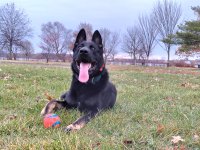
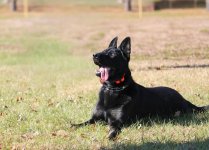
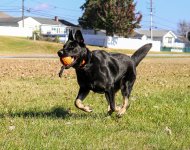
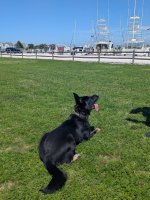
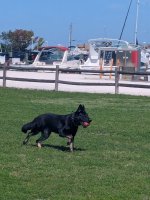
My dog is currently eating a very small snack in the morning and a bigger meal in the evening. I prefer twice a day feedings but this schedule happened organically and it's working out great - my dog looks fantastic. A few of these pics are from over the summer when he was much younger & smaller but I think they show his overall conditioning well. IMG_20251125_160806449_HDR.jpgScreenshot_20251115_183654.jpgFacebook_creation_1153435406972237.jpeg
image000000_20250809_113308.jpgimage000000_20250809_113048.jpg
 
I feed a mixture of kibble and raw. The reason for keeping kibble in the diet is one of convenience. We travel between states often and I can't always offer raw at the second house. In case of emergencies I don't want the dog turning his nose up at the kibble in the event I can't offer raw. (I've had this happen in the past.)

On days where we work extra hard, I'll offer something extra. Usually a whole chicken leg or some sort of beef.

On top of the raw food, I use a supplement from Active Power called Atlas 5-in-1 for canines and a fish oil pill.

My dog is currently eating a very small snack in the morning and a bigger meal in the evening. I prefer twice a day feedings but this schedule happened organically and it's working out great - my dog looks fantastic. A few of these pics are from over the summer when he was much younger & smaller but I think they show his overall conditioning well. View attachment 643View attachment 646View attachment 647
View attachment 648View attachment 649
Gotta say Bomber is looking good in these! Awesome photos, he definitely does got some good muscle and his coat gots that nice shine you get from raw feeding!
 
Raw is great if you have the time to go buy the ingredients, do the prep, and store it safely. I don't feed raw because it's not practical for me. I don't have the time to do the prep, I'd have to buy another freezer (I already have two in the garage), and we travel which makes dealing with raw a PITA. I can keep a bag of kibble in my comms bag that gets put in the vehicle when we respond so I have food if I need to feed her and kibble is far easier to deal with when we're at training workshops for several days. Since no one kibble is perfect, I do diet rotation. Since she's had rotation her whole life, I can change the kibble on the fly without her getting gi upset.
 
Raw is great if you have the time to go buy the ingredients, do the prep, and store it safely. I don't feed raw because it's not practical for me. I don't have the time to do the prep, I'd have to buy another freezer (I already have two in the garage), and we travel which makes dealing with raw a PITA. I can keep a bag of kibble in my comms bag that gets put in the vehicle when we respond so I have food if I need to feed her and kibble is far easier to deal with when we're at training workshops for several days. Since no one kibble is perfect, I do diet rotation. Since she's had rotation her whole life, I can change the kibble on the fly without her getting gi upset.
What do you look for in a kibble?
 
This is going to be a long answer, lol.

General rules:
  1. High quality meat based proteins with named meats as the first ingredients. Dehydrated eat is best followed by meat meal because they're low moisture which means more protein. As an example, raw chicken is up to 73% water which is lost in cooking, so it's a lot less meat.
  2. I avoid legumes high in the list as it's a cheap way to boost protein without the quality although they do provide good fiber.
  3. Sweet potatoes and oats are good. I don't worry about grain free as the grain just gets replaced with brown rice and potatoes and potatoes have no benefits whatsoever.
  4. High natural fats and oils.
  5. Lower in carbs. Unlike humans, dogs do not need carbs.
  6. No artificial flavoring, coloring, or preservatives.
  7. Complete in all essential vitamins and minerals.

First I look for a kibble with high protein (>35%), high fat, and low carbs. I don't use the guaranteed analysis, but rather dry matter basis to determine protein as this accounts for the amount of moisture in the food. To determine dry matter basis, first subtract the moisture reported in the GA from 100 to get the dry matter. Then divide the reported protein by the dry matter and multiply by 100 to get the actual percentage of protein. This helps especially if you are comparing canned food and kibble, but also normalizes kibble.

Then I look at the fat to protein ration (divide fat by protein and multiply by 100). I want it to be in the 50 - 70% range. Greater than 80% is excessive fats and generally means lots of crap fats. A higher FtP ratio also means lower carbs which I want as low as possible. Mostly I use it rule out outliers.

Lastly, I prefer foods from larger companies although I don't completely rule out smaller ones. The reality is that the smaller the company, the less likely they are to employ food scientists, animal nutritionists, and other veterinary professionals; test raw materials for impurities and nutritional content; conduct regular quality control and safety procedures; own and operate their own manufacturing facilities; and maintain in house testing labs. If it's a company or brand I'm not familiar with, I'll look into these items before I feed their food no matter how good it looks.

All of this does require a little time and research, but I only have to do it a few times throughout my dog's life. I do it when I get a puppy, when they transition to adult/maintenance food, when they transition to a senior food, and then usually every once or twice during the adult/maintenance phase to reassess my options. I find 3 to 4 that I'm happy with and then rotate amongst them changing food every two months.
 
Back
Top